In the modern marketplace, the humble carrier bag has evolved far beyond its primary function as a simple vessel for transporting goods. It has become a mobile billboard, a tactile extension of a brand’s identity, and a crucial touchpoint in the customer journey. For businesses operating within the United Kingdom, choosing the right packaging is a strategic decision that requires a deep understanding of the specific industry’s needs. Whether you are running a high-end boutique in Mayfair or a bustling bistro in Manchester, the physical qualities and aesthetic appeal of your packaging can significantly influence consumer perception and brand loyalty.
When it comes to luxury retail, the choice of material is paramount to conveying a sense of prestige and quality. High-end fashion houses and jewellery stores frequently opt for printed laminated paper bags because they offer a superior finish that standard kraft paper simply cannot replicate. These bags are not merely functional; they are designed to be kept and reused, extending the brand’s visibility long after the initial purchase. The lamination process provides a protective layer that enhances the vibrancy of the ink, ensuring that the brand’s colours remain crisp and the overall structure stays rigid and resilient against the unpredictable British weather.
The Retail Sector: Aesthetics and Structural Integrity
In the retail world, the “unboxing” experience—or in this case, the “unbagging” experience—is a vital part of the marketing mix. Retailers must balance the visual impact of their packaging with the practical requirement of carrying potentially heavy or awkwardly shaped items. Luxury retail packaging often focuses on sensory details, such as embossed logos, hot foil stamping, and elegant ribbon handles. These features work together to create a feeling of exclusivity, making the customer feel that their purchase is a reward or a special occasion.
The structural demands of retail packaging also vary depending on the product. A clothing retailer requires a bag with a wide gusset to accommodate folded garments without crushing them, whereas a bookshop might prioritise reinforced handles to support the weight of heavy hardbacks. For those looking to make a lasting impression, printed laminated paper bags serve as the gold standard. The lamination—available in both matt and gloss finishes—adds a level of thickness and durability that allows the bag to stand upright independently, providing a premium feel that aligns with high-price-point merchandise. This durability is essential, as a torn bag can immediately sour a premium shopping experience.
Brand Recognition on the High Street
Retail packaging must be eye-catching. On a crowded high street, your bag is competing with hundreds of others for attention. Retailers often use bold, full-bleed printing to ensure their logo is recognisable from a distance. The aim is to turn every customer into a walking advertisement for the store. Because retail items are usually dry and stable, these bags can focus heavily on decorative flourishes that might not be practical in other sectors.
The Hospitality Sector: Functionality and Food Safety
In contrast to the luxury-driven world of retail, the hospitality sector—encompassing restaurants, cafes, and hotels—operates under a different set of priorities. Here, the primary concern is the integrity of the contents, which are often hot, moist, or perishable. While branding remains important, the packaging must first and foremost be fit for purpose in a high-temperature or high-humidity environment.
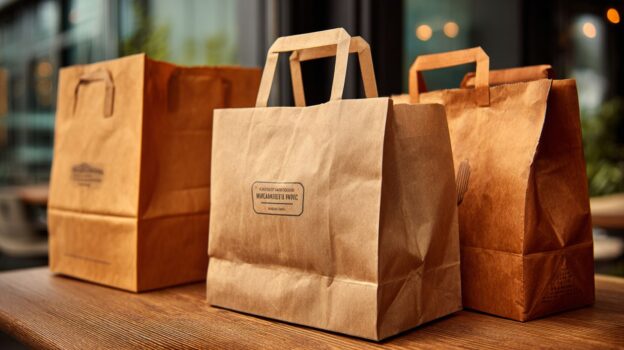
Hospitality businesses often choose uncoated kraft paper or greaseproof linings. These materials are breathable, which prevents hot food from becoming soggy due to steam buildup. While a high-gloss finish might look beautiful, it may not be the most practical choice for a takeaway container that needs to withstand heat. However, hospitality packaging has seen a massive shift towards premiumisation. High-end takeaway services and luxury hampers now use sophisticated designs to mirror the dine-in experience, proving that “functional” does not have to mean “plain.”
Key Requirements for Hospitality Packaging
When selecting paper bags for food and drink, several unique factors must be considered:
- Grease Resistance: Essential for pastries, fried foods, and gourmet burgers to prevent unsightly oil patches from seeping through the paper.
- Thermal Stability: The ability to hold heat without the glue or handles failing.
- Venting: Small perforations or breathable materials that allow steam to escape while keeping the food warm.
- Flat Bases: Specifically designed to keep takeaway containers level, preventing spills and leaks during transit.
- Food-Safe Inks: Ensuring that any branding is printed using non-toxic, water-based inks that are safe for contact with food environments.
Sustainable Practices Across Both Industries
Regardless of whether a business falls under retail or hospitality, sustainability is no longer optional in the UK. Consumers are increasingly eco-conscious, often scrutinising the environmental credentials of a brand based on its packaging. Both sectors are moving away from single-use plastics in favour of FSC-certified paper sources.
In retail, the trend is toward “reusable” paper bags—sturdy constructions that encourage the customer to use the bag for weeks or months. In hospitality, the focus is often on compostability and recyclability. Because food contamination can sometimes make paper difficult to recycle, many hospitality businesses are investing in innovative coatings that are both grease-resistant and fully biodegradable. This commitment to the environment not only helps the planet but also builds significant brand trust with a modern audience.
Comparing the Two: A Summary of Differences
While both sectors utilise printed paper bags to communicate their brand, the execution differs based on the “mission” of the bag. Retail bags are designed for the journey from the shop to the home (and beyond), focusing on aesthetic longevity. Hospitality bags are designed for the journey from the kitchen to the table, focusing on the immediate preservation of the product’s quality.
For a boutique, the bag is a souvenir of a luxury purchase. For a restaurant, the bag is a guarantee of a fresh, delicious meal. Understanding these nuances allows business owners to invest their marketing budget where it will have the most significant impact, ensuring that the packaging reinforces the brand message rather than contradicting it.
Conclusion
Choosing between retail-focused and hospitality-focused packaging is about more than just picking a size; it is about aligning your physical touchpoints with the expectations of your clientele. While retail thrives on the sophisticated allure of durable materials and striking finishes, hospitality relies on the seamless marriage of hygiene, heat management, and functional design. By selecting the right specifications—whether that involves the heavy-duty elegance of premium lamination or the breathable utility of high-grade kraft paper—you ensure your brand is represented with professionalism and care.
Is your current packaging truly reflecting the quality of your service? Whether you need to refresh your boutique’s image or streamline your cafe’s takeaway process, investing in bespoke, high-quality paper bags is a proven way to elevate your brand. Take the time to evaluate your specific needs and choose a packaging solution that carries your brand into the future.
