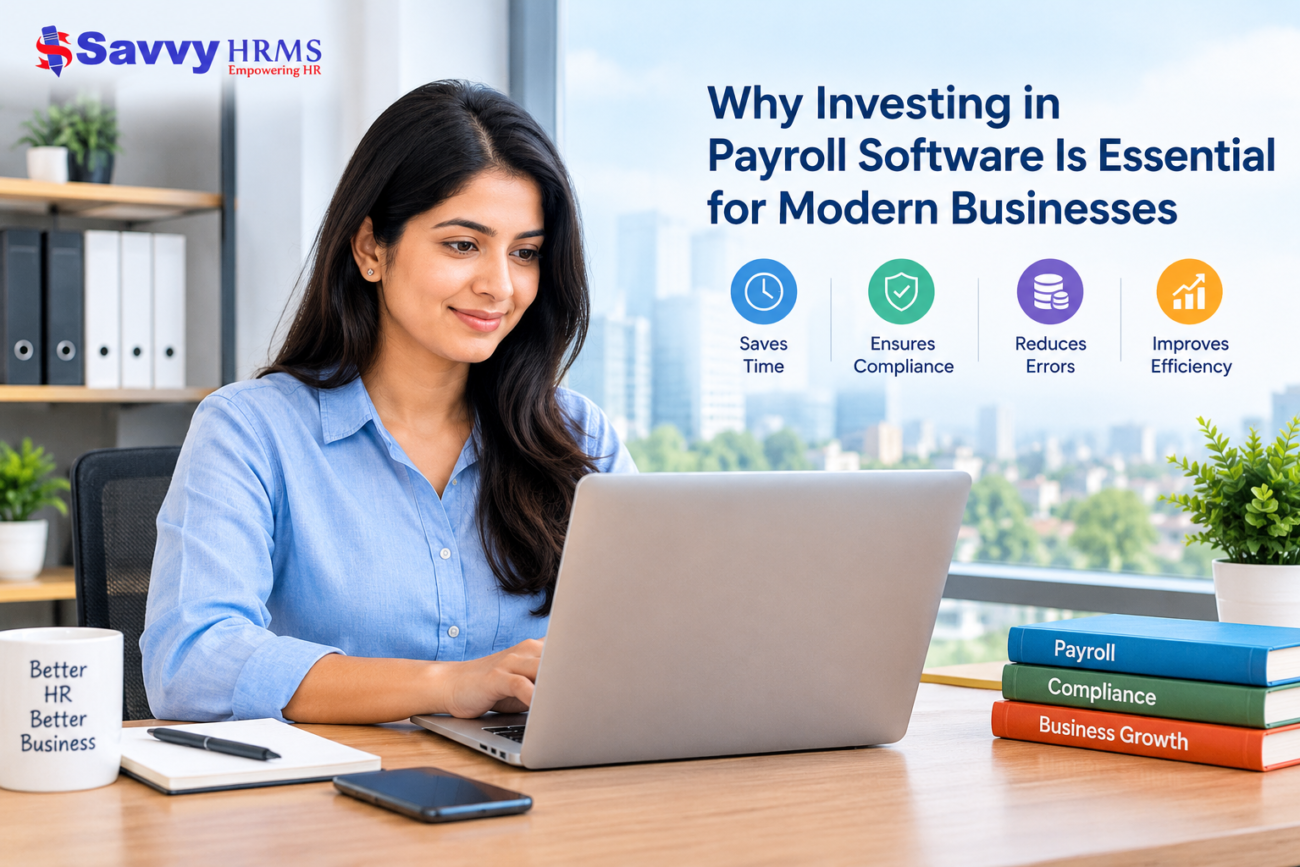
Payroll functions as a business operation which creates a direct impact on how employees maintain their financial stability. Organizations need to establish accurate salary computation systems which should deliver payments at their scheduled times. They also need to keep records of all employee payments.
The process of manual payroll management becomes difficult to handle when businesses experience growth because it leads to more frequent mistakes. The HR team needs to handle various responsibilities which include attendance monitoring, leave administration, pay computation, tax and deduction processing and payroll report development. Because of these challenges, more modern businesses are choosing payroll software.
The software solution enables organizations to perform payroll operations with less effort while building improved employee payment management systems. Organizations today consider payroll software a necessary investment because the system brings operational efficiency together with precise payroll processing.
What Is Payroll Software?
Payroll software functions as a digital platform which enables businesses to operate their employee salaries through a single unified system. The system manages salary computations, deduction processing and tax calculation operations, generates payslips, handles payroll documentation and produces various reporting outputs.
Modern payroll solutions establish connections between payroll systems and employee data systems which also handle attendance tracking, leave management and other HR process management.
The process requires fewer separate spreadsheets because it combines different data sources into one system which then performs all necessary data transfers between systems. A business that expands its staff members needs to create an organized payroll structure because this system will help them handle their regular payroll activities more effectively.
Why Is Payroll Software Important for Modern Businesses?
Payroll involves many details that need to be handled accurately. A small mistake in attendance, deductions, salary components, or tax calculations can affect an employee’s final pay.
Manual payroll processing can also consume significant time, especially when HR teams need to manage payroll for a large number of employees.
Investing in payroll technology allows businesses to automate repetitive activities while giving HR teams better control over payroll information.
1. Automates Salary Calculations
The process of calculating salaries requires combining various elements which include base pay, additional payments and mandatory deductions, extra work hours and time off and other relevant components.
The monthly process of handling these details manually takes up too much time while creating higher chances for errors to occur.
But a payroll system calculates employee salaries through available information which combines staff details with payment information from payroll records. The system reduces the need for manual calculations while establishing a standardized process for payroll management.
2. Reduces Payroll Errors
Payroll mistakes create unnecessary problems that affect both the staff members and the human resources department of an organization.
The process of incorrect salary payments happen due to wrong attendance records, uncollected deductions, repeated database records and wrong mathematical calculations which create the need for additional problem-solving work.
But an automated payroll system minimizes these risks, and HR teams can review payroll information before organizations move forward with processing payroll.
3. Saves HR Time
The payroll processing system performs several repeated tasks throughout their workday. HR teams need to gather staff details, verify work presence, perform salary computations, process deductions, create payslips and produce necessary reports and this process takes lots of time.
The software system performs automated operations which enable HR staff members to focus on other strategic workforce planning, employee assistance and other essential HR functions.
4. Connects Payroll With Attendance and Leave
The process of salary calculation depends directly on the information which shows when employees attended work and when they took their leave.
HR teams need to store data separately from payroll records through manual work as these records stay separate from each other. The process may raise the chances of making data entry mistakes.
The payroll system operates with attendance and leave data to perform payroll processing through its integrated system. The system enables businesses to track their working days while monitoring employee absences, leave time and overtime payments.
5. Helps Manage Payroll Compliance
Businesses must follow all relevant payroll and statutory laws during their employee salary payment operations. The organization must determine employee eligibility to apply PF, ESI, Professional Tax and TDS and any other requirements.
HR teams use payroll software to organize their deduction management and payroll record maintenance through its built-in system.
Businesses need to establish a system which they will update frequently to address all current regulatory requirements.
6. Makes Payslip Generation Easier
Employees require payslips to maintain their financial documentation and to support their loan requests, tax obligations and various other needs.
HR teams must handle an additional administrative duty when they create payslips through manual procedures.
Payroll software systems create payslips by using salary data which they process during their operations. The system allows employees to obtain their payslips through an employee self-service portal which depends on the system’s available features.
7. Keeps Payroll Information Organized
The payroll system contains vital confidential data which includes employee salaries and deduction amounts, their complete payment history and their personal work records.
Multiple spreadsheets and files distribute this information which creates challenges for users to find necessary records at any time.
Businesses can operate a centralized payroll system that stores their payroll data within a single well-organized database. The human resources department needs to access their required documents through simple procedures which enable them to find their previous payroll data when necessary.
8. Improves Payroll Data Security
Salary and payroll information is confidential. Businesses need to make sure that only authorized users can access sensitive employee information.
The payroll software system provides users with customized access controls that determine their operational capabilities and system availability. Organizations can assign access according to an employee’s responsibilities.
The system blocks unauthorized users from accessing vital payroll data which lets organizations keep their human resources information safe.
9. Provides Useful Payroll Reports
Payroll teams need to generate reports about employee salaries, deduction amounts, payroll expenses, payment information and all other payroll data.
The process of creating these reports through manual methods requires extra hours of work.
But the system can generate payroll reports through its built-in capabilities which users can access for their work. The generated reports enable HR teams and management to understand their payroll expenses together with all related workforce expenses.
10. Supports Business Growth
The process of handling payroll needs becomes more challenging when businesses start to expand their operations.
A system that functions well with 20 staff members will need more resources for operation once the business reaches 100 employees. The solution of using multiple spreadsheets with added manual work hours fails to prove viable as a long-term answer.
Payroll software establishes an organized structure which enables companies to handle their expanding employee numbers. Businesses can handle additional staff members without needing to increase the amount of manual payroll processing work they perform.
What Should Businesses Look for in Payroll Software?
Businesses should evaluate their payroll requirements before choosing a solution. Important features to consider include:
- Automated salary calculations
- Attendance and leave integration
- Statutory deduction support
- Payslip generation
- Employee self-service
- Payroll reports
- Employee database integration
- Role-based access
- Data security
- Scalability
- Ease of use
- Integration with other HR processes
The best hr software in India is not necessarily the one with the most features. Businesses should select software that fits their workforce size, payroll requirements, existing HR processes, and future growth plans.
Conclusion:
Payroll is a continuous business duty which needs precise work along with regular performance and fast completion. Organizations must handle their increasing HR duties when they manually manage payroll because this approach creates problems with record accuracy.
Businesses can achieve better payroll management through software solutions that help them automate salary calculations and create simple deduction methods, maintain payroll records and generate better reports.
Businesses achieve better employee management through their attendance system which connects with payroll, leave tracking and other HR systems. Businesses need payroll technology for their operations because it functions as their central processing system for salary distribution.
The system establishes itself as a vital element that organizations can use to build their HR operations into more efficient and organized systems that can grow in size.
Looking for a Simpler Way to Manage Payroll?
Book a free demo of Savvy HRMS today and find out how Savvy HRMS can help you manage payroll and other HR processes more efficiently..
