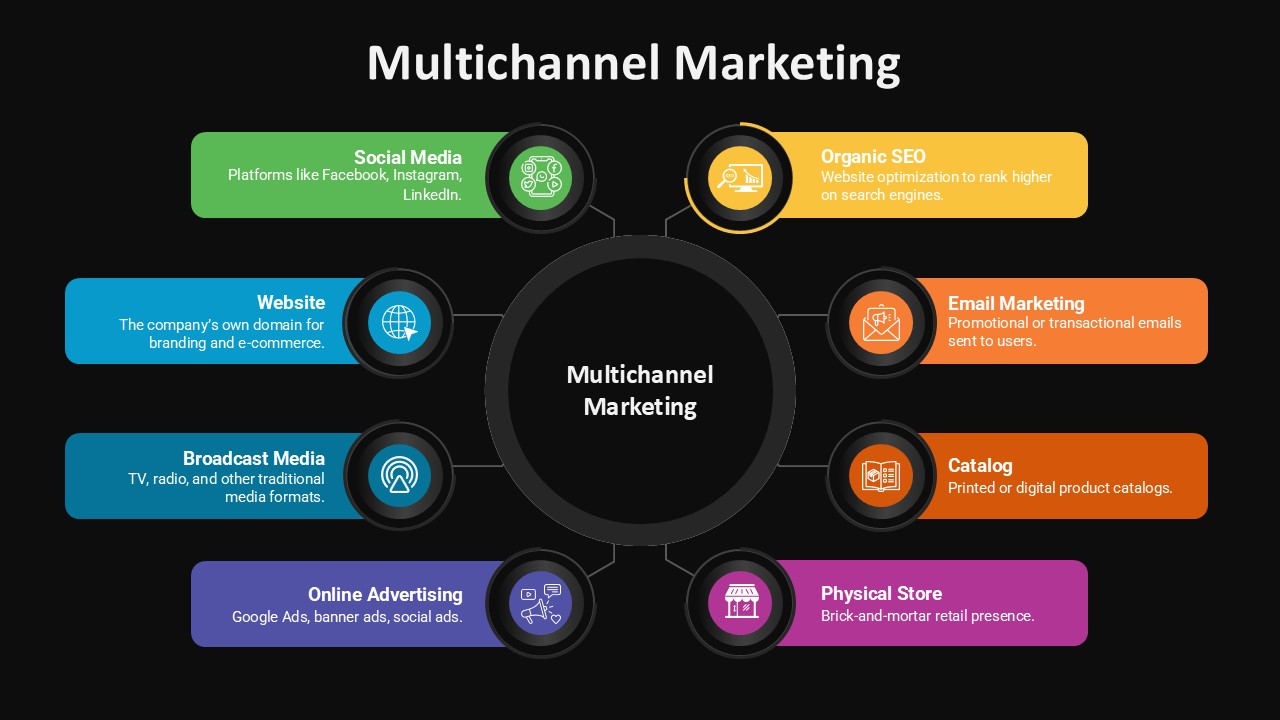
Many businesses approach digital advertising as a simple transaction: pay for space, drive traffic, and hope for a conversion. This view often leads to a frustration where teams spend significant time and resources chasing metrics that do not actually translate into growth. The reality of modern marketing is significantly more complex, as customers rarely follow a linear path toward a decision.
Understanding how to orchestrate a cohesive multichannel marketing strategy is typically what separates organizations that see consistent results from those that feel like they are constantly throwing money at algorithms without seeing a clear return.
The Common Assumption: Choosing the Single Best Channel
A frequent misconception is that success in the digital space relies on finding the one platform where your customers spend their time. The assumption is that if you focus exclusively on that channel, you can dominate it and maximize efficiency. While specialization is helpful, it ignores how people actually interact with brands.
A potential customer might encounter a business through an organic search, then see a social media advertisement, and perhaps later interact with an email newsletter before finally making a purchase. If a company treats these channels as separate silos, they lose the ability to speak to the user based on where that person is in their journey. The focus should typically shift from “which channel is best” to “how do these channels reinforce one another.”
What Actually Matters: Consistency and Data Integration
The primary objective in a sophisticated digital strategy is maintaining a consistent narrative across every touchpoint. When a brand’s messaging feels disjointed—where a social media advertisement offers one value proposition while the website highlights another—it creates friction. That friction is a primary reason why visitors leave without taking action.
What truly matters is the ability to connect data across these channels. When a user engages with an advertisement, that action should ideally inform the subsequent content they see elsewhere. This creates a cohesive experience. For residents of a particular area, this often means ensuring that digital touchpoints reflect the specific needs and values of that regional community. By grounding digital advertising in a broader understanding of the audience, businesses can create a sense of familiarity and trust that a single, isolated campaign simply cannot achieve.
Why Contextual Messaging Drives Better Engagement
The reason this approach is effective is that it aligns with human behavior. People tend to trust brands that acknowledge their progress. If a business knows that a visitor has already engaged with certain educational content, they can tailor future interactions to provide deeper value rather than repeating the same introductory message. This requires an internal commitment to tracking engagement metrics meaningfully, rather than just looking at surface-level impressions or clicks.
How to Discern Between Noise and Signal in Your Data
In a crowded digital environment, it is easy to become overwhelmed by the sheer volume of available metrics. Many businesses track dozens of data points, yet struggle to explain how those points impact their bottom line. A useful way to filter this information is to categorize metrics based on their intent.
1. Awareness metrics often indicate reach but are rarely a proxy for business health.
2. Engagement metrics typically show whether the audience finds the content relevant.
3. Conversion metrics are the only ones that correlate directly with success.
A common pitfall is giving equal weight to all three. A thoughtful strategy prioritizes conversion data and uses the other two categories to identify where the funnel might be leaking. If an advertisement has high reach but low engagement, the issue likely resides in the creative assets or the audience targeting. If engagement is high but conversions are low, the challenge is typically located on the landing page or in the offer itself. Discerning between these scenarios allows for surgical improvements rather than wholesale changes.
Reframing the Strategy: The Audience-Centric Model
The most effective way to approach multichannel marketing is to abandon the idea of “channels” entirely and focus on “conversations.” When you view the digital landscape through the lens of a continuous conversation, the goal is not to force a conversion as quickly as possible, but to earn the right to move the person to the next stage of their decision-making process.
This shift changes how you evaluate your marketing efforts. Instead of asking how to squeeze more performance out of a specific platform, you begin to ask: “Does this series of interactions make sense for the person receiving them?”
For organizations serving local populations, this approach is particularly potent. By providing information that feels relevant to the local environment and the unique challenges faced by the audience, a business moves from being a generic vendor to a helpful, credible resource. This fosters a relationship that is far more durable than one built purely on paid traffic.
When you invest in a strategy that respects the nuance of the user journey, the need to obsess over platform-specific algorithm changes often diminishes. You become less reliant on the latest trend and more focused on building a sustainable ecosystem. The results may not appear overnight, but they tend to be more stable, more scalable, and significantly more aligned with the long-term goals of the business.
The most successful practitioners in this space are those who understand that digital advertising is merely one tool in a much larger toolkit. By weaving these tools into a broader, integrated strategy, businesses can cut through the noise, build genuine connections, and ultimately create a customer experience that justifies the effort of the entire marketing investment.
