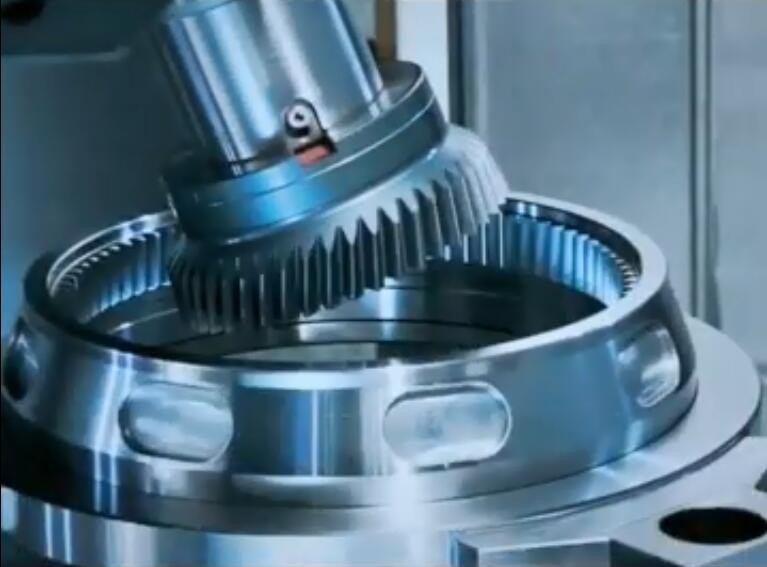
Modern gear manufacturing requires advanced machining methods capable of producing highly precise gears while maintaining high productivity. One of the most innovative technologies used in modern gear production is power skiving. This process allows manufacturers to produce internal and external gears faster and more efficiently than many traditional machining methods. At the center of this process are specialized power skiving tools, which are designed to perform high-speed cutting operations with exceptional accuracy. As industries continue to demand faster production and higher gear quality, the role of skiving gear cutting has become increasingly important in modern manufacturing environments.
Understanding the Power Skiving Process
Power skiving is a gear machining method used to cut gear teeth by combining rotational motion between the workpiece and the cutting tool. Unlike conventional gear shaping or hobbing, power skiving uses a synchronized cutting movement that allows both the tool and the gear blank to rotate simultaneously at specific angles.
This unique motion allows power skiving tools to remove material efficiently while maintaining accurate gear tooth geometry. The tool engages the workpiece at a specific angle, gradually forming the gear teeth with high precision. Because the cutting action is continuous and efficient, the process is capable of achieving high productivity compared to traditional gear machining techniques.
The efficiency of skiving gear cutting makes it particularly suitable for producing internal gears, which are often difficult to manufacture using other methods. Many modern gear manufacturing facilities rely on this process to improve production speed and reduce machining costs.
Advantages of Power Skiving in Gear Manufacturing
Power skiving offers several advantages that make it highly attractive for modern gear production. One of the most significant benefits is productivity. The process allows gears to be produced much faster than traditional shaping methods, especially when machining internal gears.
Another advantage is machining flexibility. Using properly designed power skiving tools, manufacturers can produce both internal and external gears on the same machine. This reduces the need for multiple specialized machines and simplifies production workflows.
The skiving gear cutting process also provides excellent accuracy and surface quality. Because the tool and workpiece move in a controlled synchronized motion, the resulting gear teeth maintain consistent geometry and smooth surface finishes. This helps improve the performance and durability of the finished gears.
Additionally, power skiving can be integrated into multi-tasking CNC machines that perform several operations in a single setup. This reduces part handling and improves overall manufacturing efficiency.
Design and Structure of Power Skiving Tools
The effectiveness of the power skiving process depends heavily on the design and quality of the cutting tools used. Precision power skiving tools are engineered with carefully designed cutting edges that match the gear tooth geometry required for the machining operation.
These tools are typically manufactured with extremely tight tolerances to ensure that they generate accurate gear profiles during machining. The cutting edges are designed to handle high rotational speeds and heavy cutting loads without losing accuracy.
Advanced manufacturing technologies such as CNC grinding and precision measurement systems are used to produce these tools. These processes ensure that each cutter maintains consistent geometry and performance during gear cutting operations.
The angle between the cutter axis and the workpiece axis is another critical factor in the skiving gear cutting process. This angle allows the cutting edges to engage the material effectively and remove chips efficiently during machining.
Materials Used in Skiving Tools
Cutting tools used for gear machining must withstand high cutting forces and elevated temperatures. For this reason, power skiving tools are commonly manufactured from high-performance materials such as carbide or high-speed steel.
Carbide tools are widely used in modern gear manufacturing because they provide exceptional hardness and allow higher cutting speeds. This improves productivity and helps maintain consistent machining quality.
High-speed steel tools are also used in certain applications because of their toughness and resistance to impact. These materials allow tools to maintain their cutting edges even under demanding machining conditions.
Advanced tool coatings are often applied to further enhance tool performance. Coatings such as titanium aluminum nitride improve wear resistance, reduce friction, and extend the lifespan of the cutting tool.
Industrial Applications of Power Skiving
The skiving gear cutting process is widely used across multiple industries where precision gears are required. Automotive manufacturers rely heavily on this technology for producing transmission gears, planetary gears, and internal gear components used in modern vehicles.
Electric vehicle manufacturers are also increasingly using power skiving technology to produce high-efficiency gear systems used in electric drivetrains. The ability to produce complex internal gears quickly makes this process highly valuable in the automotive sector.
Aerospace engineering is another field where precision gear manufacturing is critical. Aircraft systems require gears that operate reliably under extreme conditions. High-quality power skiving tools help manufacturers produce gears that meet strict aerospace quality standards.
Industrial machinery manufacturers also use this process to produce gears for compressors, turbines, pumps, and heavy mechanical equipment. Reliable gear performance is essential for maintaining efficiency and reducing equipment downtime in these systems.
Robotics and automation industries also benefit from advanced gear manufacturing techniques. Accurate gears allow robotic systems to operate smoothly and maintain precise motion control during automated processes.
Choosing the Right Cutting Tools
Selecting the correct cutting tools is essential for achieving optimal performance in gear manufacturing operations. Manufacturers must consider several factors including gear module, material type, machining speed, and machine capabilities.
High-quality power skiving tools must be matched precisely to the gear design and machining conditions. Proper tool geometry ensures efficient chip removal and prevents excessive tool wear during machining.
In the skiving gear cutting process, machine setup and synchronization between the tool and workpiece are also critical factors. Correct alignment and accurate machine programming help ensure consistent cutting performance and gear accuracy.
Working with experienced tooling suppliers can help manufacturers select the most suitable tools for their applications. Tool manufacturers often provide engineering support and technical recommendations that improve machining efficiency and tool longevity.
Maintenance and Tool Life Optimization
Even high-performance cutting tools require proper maintenance to maintain consistent machining quality. Regular inspection helps identify wear before it affects gear accuracy or surface finish.
When power skiving tools begin to wear, they can often be reconditioned through precision grinding. Regrinding restores the cutting edges and allows the tool to continue producing accurate gear profiles.
Proper storage and careful handling are also important to prevent damage to the cutting edges. Cutting tools should be stored in protective cases and kept clean to maintain their performance.
Maintaining correct machining parameters such as cutting speed, feed rate, and coolant flow also helps extend tool life and improve machining efficiency.
Future Developments in Power Skiving Technology
Manufacturing technology continues to evolve, and power skiving is becoming an increasingly important method for high-efficiency gear production. Advances in CNC machine technology are enabling faster and more accurate skiving gear cutting operations.
Improved software and digital simulation tools allow engineers to optimize tool geometry and machining parameters before production begins. These technologies help reduce development time and improve machining performance.
Tool manufacturers are also developing new materials and advanced coatings that further enhance the durability of power skiving tools. These innovations allow tools to operate at higher speeds and maintain consistent performance during long production cycles.
Automation and digital monitoring systems are also transforming gear manufacturing. Smart manufacturing systems can track tool wear and machining conditions in real time, allowing operators to schedule maintenance before tool failure occurs.
Conclusion
Power skiving has become one of the most advanced and efficient methods for producing gears in modern manufacturing. By combining high-speed cutting with synchronized tool and workpiece motion, the process allows manufacturers to produce precise gears with exceptional productivity.
High-quality power skiving tools play a critical role in achieving accurate machining results and maintaining consistent production quality. At the same time, the continued development of skiving gear cutting technology is helping industries meet the growing demand for precision gears used in automotive systems, aerospace equipment, industrial machinery, and automated manufacturing systems.
